
Ready to try Hearth?
Join 12,000+ families already staying in sync on one beautiful shared display.
See Pricing Learn MoreThe smart home category is full of gadgets that seem clever in a product demo and end up gathering dust six months later. But some connected devices genuinely return their cost — in lower utility bills, avoided repairs, or hours of reclaimed family time. Here's how to tell the difference, and which categories are worth prioritizing for families.
Before buying any smart home device, run it through three questions: Does it save money directly (lower bills, avoided repairs)? Does it save time that you'd otherwise spend on a recurring task? Does it reduce stress or prevent a problem that has real consequences?
A device that answers "yes" to at least two of these questions is almost always worth considering. A device that answers "yes" to only one — and it's not a big saving — is probably a nice-to-have. Use this framework and you'll spend less and get more out of every purchase.
Smart thermostats like the Ecobee and Google Nest have been delivering measurable savings since the early 2010s, and they remain one of the clearest wins in the smart home category. The average US household spends around $900 a year on heating and cooling. A well-configured smart thermostat typically saves 10–15% of that — roughly $90–$135 annually. Most models cost $150–$250, which means payback in one to three years.
For families, the benefit goes beyond the bill. Smart thermostats learn your schedule automatically, so the house is warm when everyone wakes up and comfortable when kids come home from school — without anyone needing to remember to adjust the thermostat. For working parents who leave and return at irregular times, the savings can be higher because the system responds to actual occupancy rather than a fixed schedule.
Water damage is the second most common homeowner insurance claim in the US. The average claim is around $11,000. A basic smart water sensor costs $20–$50 and sends an alert to your phone the moment moisture is detected under a sink, near a water heater, or behind an appliance. One avoided leak claim pays for a dozen sensors many times over.
This is a device that passes the ROI test easily — the saving is rare but catastrophic, and the cost of the insurance is minimal. Place sensors under every sink, near the water heater, behind the refrigerator, and near the washing machine. For homes with a basement, add one near the sump pump. Total investment: under $200 for whole-home coverage.
Smart plugs are inexpensive (often $10–$20 each) and work with any existing appliance. For families, the biggest win is with devices that draw standby power: televisions, gaming consoles, and entertainment systems can collectively add $50–$100 to an annual electricity bill just sitting in standby mode. A smart plug on a power strip connected to your entertainment center, set to cut power automatically at midnight, eliminates that waste with zero daily effort.
Smart plugs also solve a family-specific problem: devices left on when kids leave for school. A plug connected to a bedroom lamp or gaming setup can be scheduled to turn off automatically each morning, removing a recurring source of household friction and a small but real energy cost.
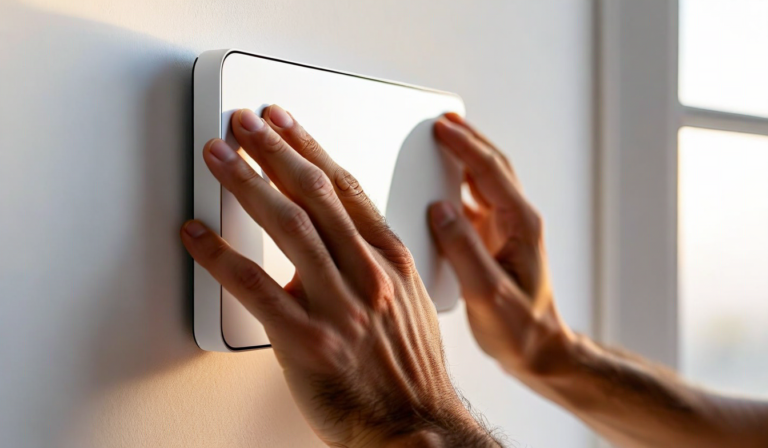
A shared family display like Hearth doesn't lower your electricity bill. Its return comes in a different currency: time and mental load. The average family of four spends a meaningful amount of weekly time on coordination — syncing calendars, planning meals, reminding kids about routines, and trying to get everyone on the same page before the school day starts.
Families using Hearth consistently report that the morning routine runs faster when the schedule is visible to everyone, and that missed appointments and forgotten pickups drop to near zero. The Hearth Family plan costs less per month than a single takeout dinner — the time saved in a single week typically exceeds that cost. Over a year, the value compounds: fewer rushed mornings, fewer last-minute scrambles, and a household where everyone knows what's happening.
For families who've calculated it, the ROI of a family display isn't hard to find. It's in the meals you planned instead of ordered out, the extracurricular you didn't miss, and the morning that actually started on time.
A few categories that get a lot of marketing attention but often underperform on ROI for families: smart refrigerators (significantly more expensive than standard models, limited practical upside), robot vacuums under $200 (often frustrating on rugs and stairs — worth spending more or waiting for the category to mature further), and most smart lighting systems when purchased as a full ecosystem replacement (the entry cost is high; adding a few bulbs in high-traffic areas makes more sense).
The pattern is consistent: devices that automate a specific, recurring, high-cost or high-effort task tend to pay off. Devices that are primarily impressive to demonstrate rarely do.
Start with the device that saves time every single day.
Hearth pays for itself in the first month of fewer missed appointments and smoother mornings.
See Hearth Plans → Learn More