It takes a village to raise a child. The saying has survived centuries because it captures something real: no nuclear family operates in complete isolation. Grandparents, nannies, after-school caregivers, family friends who do the Tuesday pickup when everyone else is swamped — these people are essential. And coordinating with them is its own full-time job.
When we designed Hearth's caregiver access features, we started with a simple question: what does the person caring for your child actually need to know? The answer turned out to be surprisingly focused. They need pickup times, drop-off times, special notes for today ("swimming lesson after school — pack suit"), allergies and food restrictions, and emergency contacts. They don't need to see your full calendar, your financial discussions, or anything unrelated to the task of caring for your child.
That insight shaped everything about how Hearth handles multi-person household coordination.
The Caregiver Problem, Specifically
The logistics of coordinating with non-household caregivers are genuinely complicated. You might have:
- Grandparents who are tech-comfortable but not tech-savvy — a separate app is a significant barrier
- A nanny who is professional and organized but needs today's instructions in a format that doesn't require parsing a full family calendar
- A rotating set of caregivers (college-age niece on Mondays, neighbor on Thursdays) who each have slightly different roles and access needs
- School pickup shared between parents and grandparents on different days
The traditional solution is a combination of text messages, a whiteboard in the kitchen, verbal handoffs, and a group chat that's one misread message away from a missed pickup. Every family knows this problem. Most families have resigned themselves to it.
Hearth doesn't completely solve caregiver coordination — nothing will, because human communication is inherently messy. But it gives you a shared source of truth that significantly reduces the surface area for miscommunication.
How Caregiver Access Works in Hearth
Caregiver Profiles
You can add a caregiver to your Hearth household with a limited-access profile. They receive an app invite, and their view shows only the information relevant to their role: the current day's schedule, any special notes flagged for caregivers, the kids' routines, and emergency contact information. They can see what they need to see. They can't see what they don't.
Day Notes
This is the feature caregiver families use most. Each morning, you can attach a day note to the household display — a short message visible to anyone with caregiver access. "Ella has violin today, pick up at 4:30 not 3:30." "Marcus is fighting a cold — skip outdoor play, no orange juice." "Pizza in the freezer for dinner if you're staying." These notes surface prominently in the caregiver view and disappear the next day. No archive. No clutter. Just today's relevant information.
Routine Visibility
Kids' routines — the step-by-step sequences for morning, after school, bedtime — are visible to caregivers. This is enormously useful when a caregiver is new or occasional. Instead of parents leaving a handwritten note or sending a text, the routine is just there. The caregiver follows the same steps the kids are used to, which reduces confusion on both ends.
Working with Grandparents Specifically
Grandparents occupy a special place in the caregiver ecosystem. They're family, not employees. They may have opinions about the schedule. They're often deeply invested in the kids but less comfortable with technology. They may only help occasionally, which means each caregiving session requires a full re-briefing.
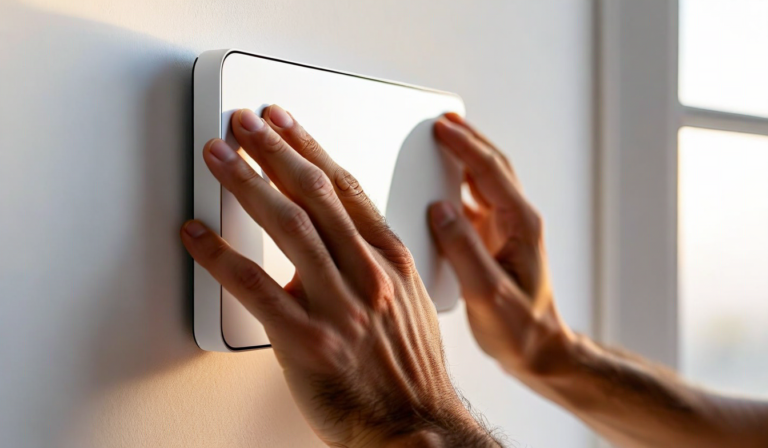
We've found that the best approach with grandparents is to keep their Hearth access simple and never require them to navigate the app themselves. Most grandparents who care for Hearth families do so in the home where the display is mounted — meaning the display itself, visible on the wall, is their interface. They don't need to open an app. The day's schedule is on the wall. The day note is visible. The kids' routines are there if they need them.
Several Hearth families have told us that getting grandparents on Hearth actually improved their relationship with the grandparents around caregiving — not because of the tech, but because a shared visible system reduced the ambiguity that caused friction. Grandma no longer needs to call three times to confirm pickup time. It's on the display. Everyone relaxes.
Working with Nannies and Professional Caregivers
Professional caregivers typically prefer clarity and structure. They want unambiguous instructions, and they want to be set up for success. Hearth works well for this profile because it gives nannies and professional caregivers a single authoritative source for the day's information — not a pile of texts to parse, not a verbal briefing that might be misremembered, but a display in the kitchen that shows exactly what's happening today.
For nannies who manage multiple aspects of the household — school pickups, meal prep, after-school activities — the Hearth calendar becomes a genuine work tool. The ability to see the week at a glance, know what each child needs each day, and check the meal plan for tonight's dinner reduces the cognitive load of the job and prevents the small miscommunications that erode working relationships over time.
Privacy and Boundaries
One thing we hear consistently from families is the importance of maintaining appropriate boundaries in caregiver relationships — especially with professional caregivers. You want your nanny to have what they need. You don't want to overshare personal family information.
Hearth's tiered access model is designed for this. Caregiver profiles see a subset of the household information. Core family profiles see everything. You control who sees what, and those permissions can be adjusted any time. If a caregiver's role changes — or if someone leaves the household — access can be removed in seconds from the app.
Ready to bring your village onto Hearth? Caregiver access is available on all Hearth plans. Add as many caregiver profiles as your village requires.
View Hearth PlansThe Bigger Picture
The families who care for children together — parents, grandparents, nannies, neighbors, friends — form an informal care network that rarely gets acknowledged for its complexity. It's held together by goodwill, communication, and an enormous amount of invisible coordination work, usually done by mothers.
Hearth can't replace the goodwill. But it can reduce the coordination overhead significantly — giving everyone who cares for your children access to exactly the information they need, in a format they can actually use, without requiring anyone to send one more text message asking "what time is pickup today?"
Your village deserves good tools. That's what Hearth is here to be.